
Leading business aviation voices have welcomed a bipartisan measure now before the U.S. Senate that would restore the full value of the sustainable aviation fuel (SAF) tax credit and extend the incentive for eight years.
The legislation, titled the Securing America’s Fuels Act (S.3759), would return the “45Z Clean Fuel Production Credit” credit to $1.75 per gallon for qualifying SAF producers, further helping to close the cost gap with conventional jet fuel. The bill would also extend the credit through 2033, a key step to scaling domestic SAF production.
Co-sponsored by Sens. Jerry Moran (R-KS), Catherine Cortez Masto (D-NV), Joni Ernst (R-IA) and Amy Klobuchar (D-MN), S.3759 is companion legislation to H.R.6518, introduced last year in the House of Representatives by Reps. Mike Flood (R-01-NE) and Sharice Davids (D-03-KS).
“We’re encouraged to see bipartisan SAF legislation introduced in both the House and Senate,” said Nancy Bsales, chief operating officer at aviation sustainability solutions provider 4AIR and co-chair of NBAA’s Environmental Committee. “The SAF Act represents an important opportunity for Congress to recognize the value renewable fuel brings to U.S. competitiveness, energy security and climate progress.”
The promotion of policies that foster the production, availability and use of SAF is a key part of the business aviation industry’s efforts to achieve net-neutral carbon emissions by 2050, as highlighted through CLIMBING. FAST., an industry program to highlight the sector’s societal benefits, including leadership on sustainability through innovation.
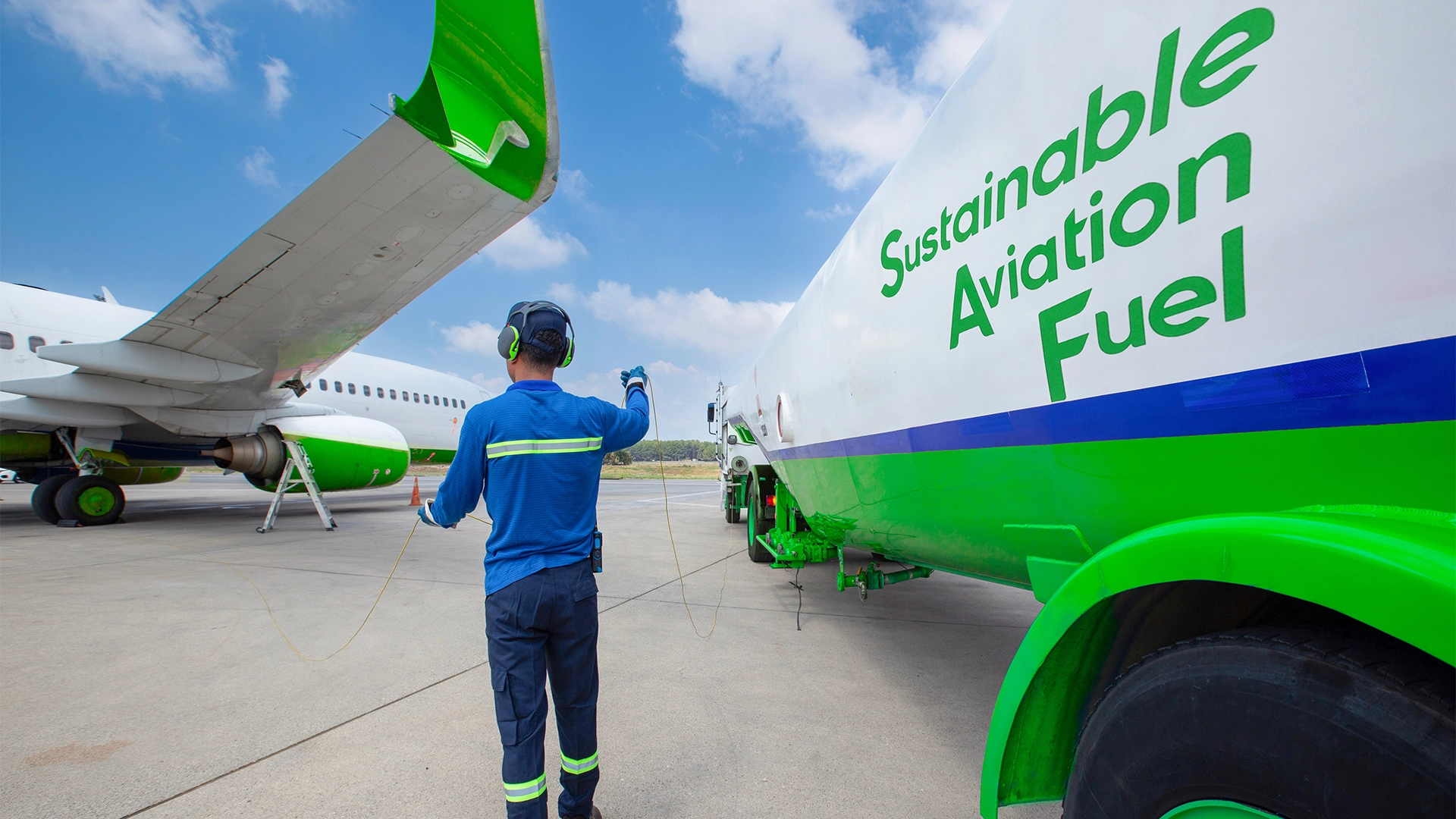
In addition to cutting life-cycle greenhouse gas emissions by up to 80% over traditional aviation fuels in its neat form, SAF production also encourages national energy independence and job creation across multiple sectors, from agriculture to technology and innovation.
“The tax credit applicable to the production of sustainable aviation fuel, as proposed in S.3759, will continue to accomplish a wide array of benefits if restored this session,” said Keeley Burgess, an aviation attorney with Aviation Legal Group P.A. and member of NBAA’s Environment Committee, made up of industry subject matter experts. “This tax credit can help our industry achieve lower greenhouse gas emissions while simultaneously providing farming communities with an additional avenue for income.”
Bsales agreed, adding: “Since SAF first became commercially available, production has nearly doubled, if not tripled, year over year. The growth curve is unmistakable, and trending exactly where the industry needs it to. With the restoration of value under 45Z helping to scale sustainable fuel production, business aviation is well-positioned to continue leading in SAF adoption as availability expands across the U.S.
“Because of its unique production challenges and its high climate mitigation potential, SAF warrants targeted policy treatment,” she added. “Specifically, stable, stackable and technology neutral incentives tied to measurable lifecycle greenhouse gas performance. When the policy environment is right, the technology follows.”