
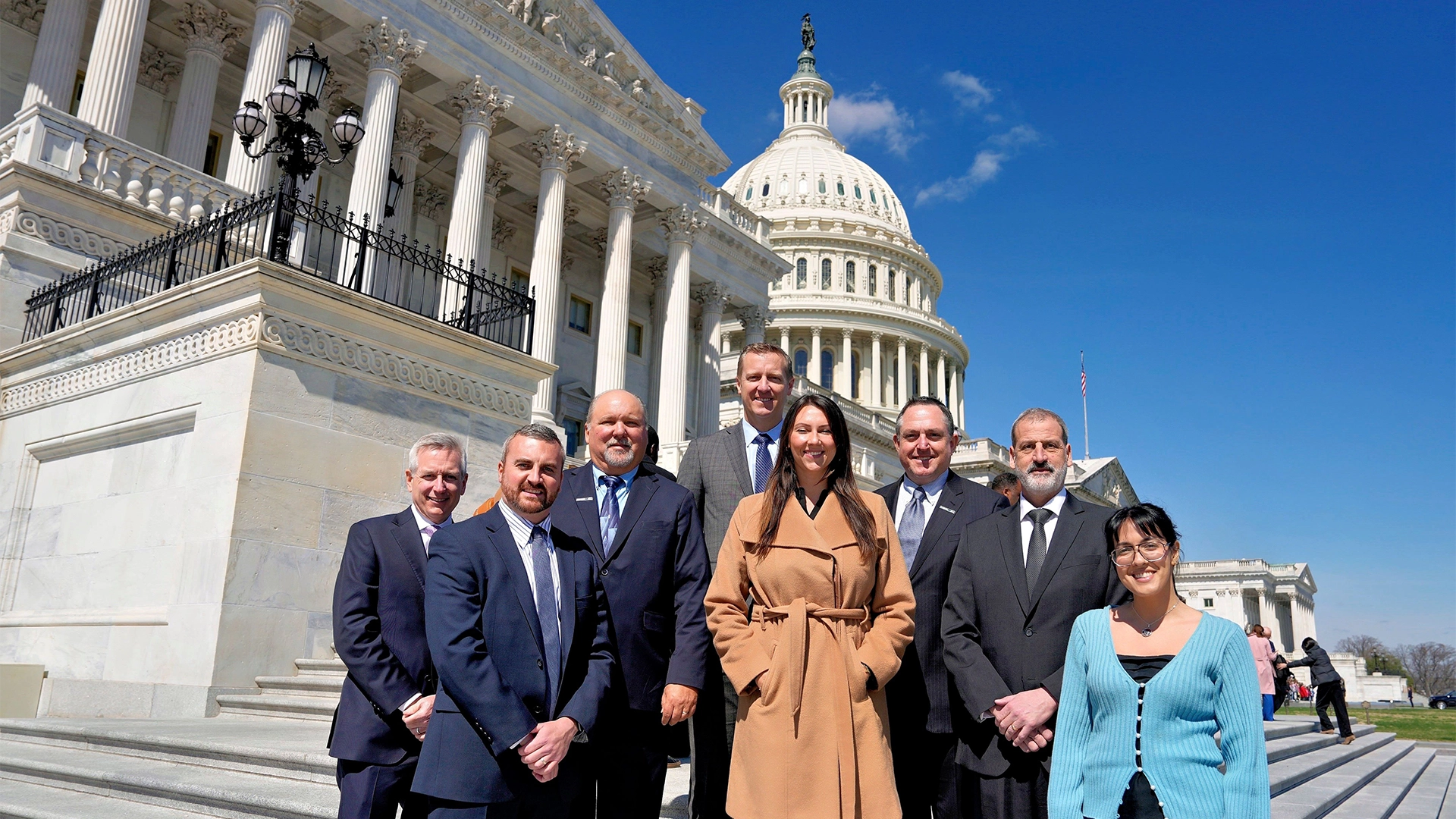
Business aviation professionals from across the country gathered on Capitol Hill March 18 for a daylong series of meetings with congressional lawmakers and staff to advance policies supporting the industry’s goal of achieving net-zero carbon emissions by 2050, while strengthening American energy independence and supporting rural economies.
The CLIMBING. FAST. Capitol Hill Fly-In, organized by the National Business Aviation Association (NBAA), underscored the industry’s essential role in supporting 1.3 million American jobs and nearly $340 billion in economic output, while driving innovation in sustainable technologies and clean fuels.
The CLIMBING. FAST. initiative is a branded, multi-platform industrywide advocacy campaign showcasing the industry’s societal benefits to policymakers and opinion leaders. Learn more about CLIMBING. FAST.
During the fly-in, members of NBAA’s Environmental Committee urged members of Congress and their staff to advance key bipartisan legislation to scale sustainable aviation fuel (SAF) production. This included:
- The Securing America’s Fuels Act (H.R. 6518/S. 3759), which would restore the Section 45Z Clean Fuel Production Credit for SAF to $1.75 per gallon and extend it through 2033
- The Farm to Fly Act (H.R. 1719, S. 114), which would designate SAF as an advanced biofuel eligible for U.S. Department of Agriculture support programs
“The reduced tax credit has made it more financially advantageous for producers to make renewable diesel instead of SAF,” said Scott Cutshall, president of real estate and sustainability at Clay Lacy Aviation and committee co-chair. “Restoring the credit to $1.75 is critical to give producers the confidence to continue building production capacity.”
Clay Lacy Aviation, a fixed-base operator, has offered SAF since 2021 and was among the first 10 airport locations in the U.S. to do so.
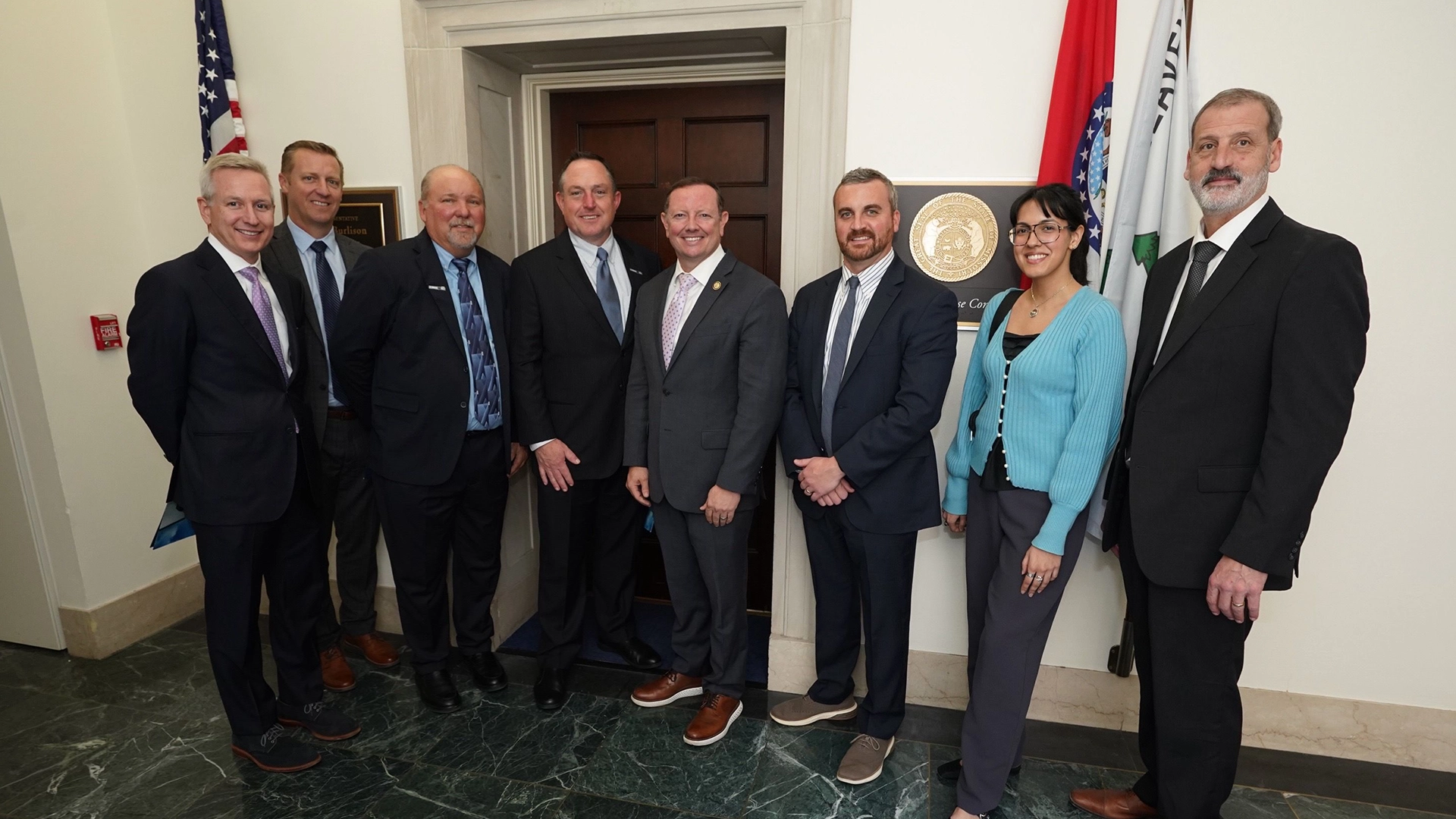
“The reduced tax credit has made it more financially advantageous for producers to make renewable diesel instead of SAF. Restoring the credit to $1.75 is critical to give producers the confidence to continue building production capacity.”
Business aviation has already reduced its carbon footprint by 40% over the past four decades, with today’s aircraft approximately 35% more efficient than previous generations. SAF, a drop-in jet fuel produced from renewable feedstocks, can reduce lifecycle greenhouse gas emissions by up to 80% compared to conventional jet fuel.
“It’s a collaborative ecosystem, and every part of the industry plays a role,” said Corey Hanlon, manager of communications and government relations at New Jersey’s Morristown Airport (MMU), which serves one of the nation’s busiest airspace regions. “Strengthening the 45Z credit will help drive new production capacity across the country and make SAF more widely available.”
According to the Americans for Clean Aviation Fuels Coalition, domestic SAF production could increase U.S. gross domestic product by more than $78 billion by 2035 and support more than 400,000 jobs at peak production, while creating new opportunities for farmers and rural communities.
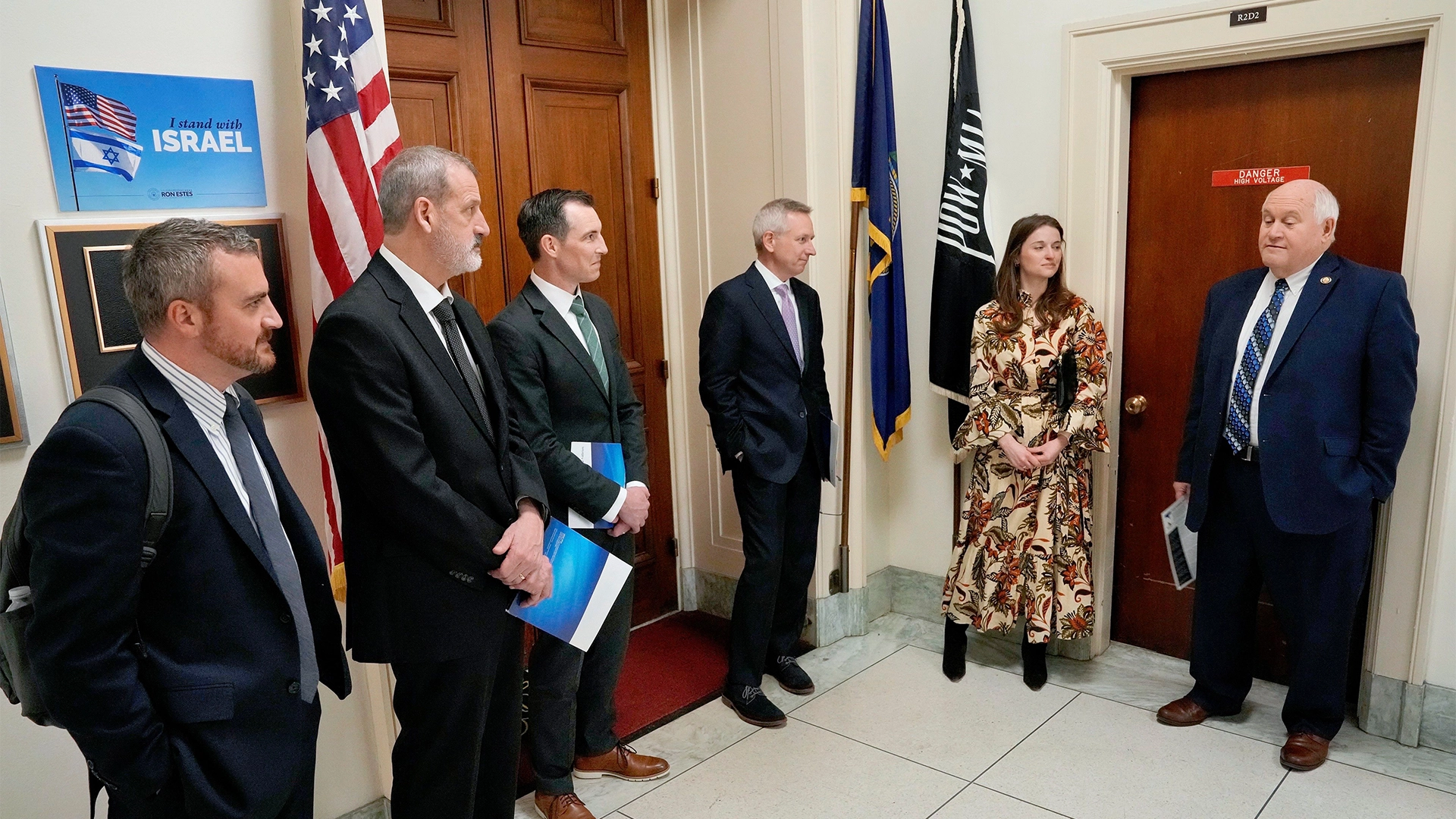
“Strengthening the 45Z credit will help drive new production capacity across the country and make SAF more widely available.”
“Members of Congress need to hear directly from their constituents about why these priorities matter,” said Kristie Greco Johnson, NBAA senior vice president of government affairs. “Today’s CLIMBING. FAST. fly-in demonstrated that business aviation leaders across every segment of our industry – from airports to manufacturers to operators – are united behind policies that would accelerate progress toward net-zero emissions while strengthening American energy independence and supporting rural economies.”
Beyond SAF, business aviation serves as an incubator for innovation across a variety of sustainability initiatives, including operational efficiencies, airspace modernization and the development of electric, hybrid and hydrogen-propulsion technologies. These comprehensive efforts anchor the industry’s roadmap to achieving net-zero emissions by 2050.
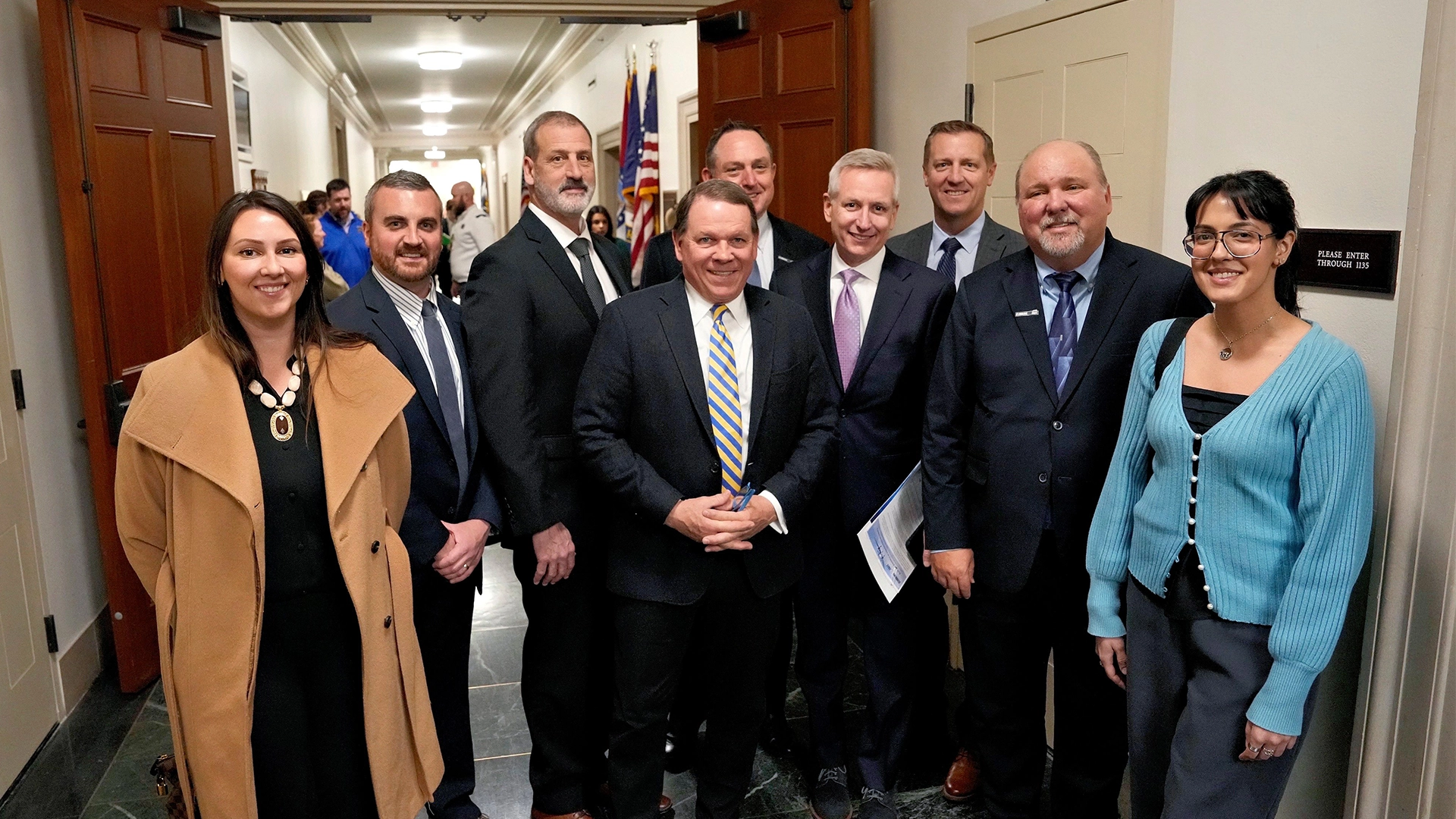
NBAA committee members met with: House Transportation & Infrastructure Chairman Rep. Sam Graves (R-6-MO), Rep. Jeff Crank (R-5-CO), Rep. Ron Estes (R-4-KS), Rep. Eric Burlison (R-7-MO), Rep. Young Kim (R-40-CA).
They also met with staff members for House Majority Whip Tom Emmer (R-6-MN), Sen. Andy Kim (D-NJ), Rep. Anna Paulina Luna (R-13-FL), Rep. Randy Fine (R-6-FL), Rep. Nancy Mace (R-1-SC), Rep. Jared Moskowitz (D-23-FL), Rep. Luz Rivas (D-29-CA) and Rep. Dwight Evans (D-3-PA) and Rep. Buddy Carter (R-1-GA).
The committee also met with Michael Hawthorne and Grace Enda from the Senate Finance Committee, chaired by Sen. Mike Crapo (R-ID) and whose ranking member is Sen. Wyden (D-OR), as well as Nick O’Boyle and Michael Grossman from the House Committee on Ways and Means, chaired by Jason Smith (R-8-MO) and whose ranking member is Richard Neal (D-1-MA).