

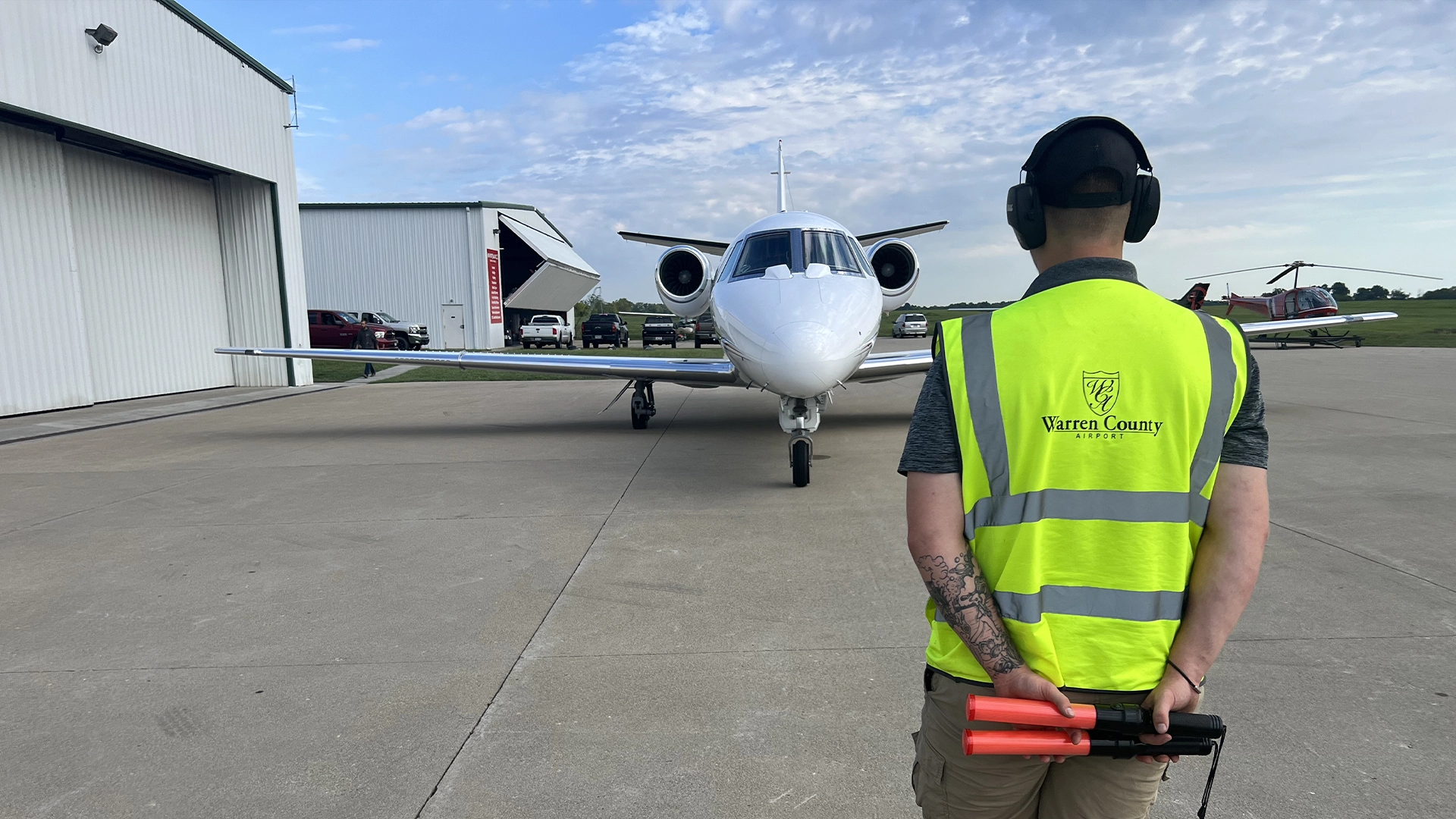
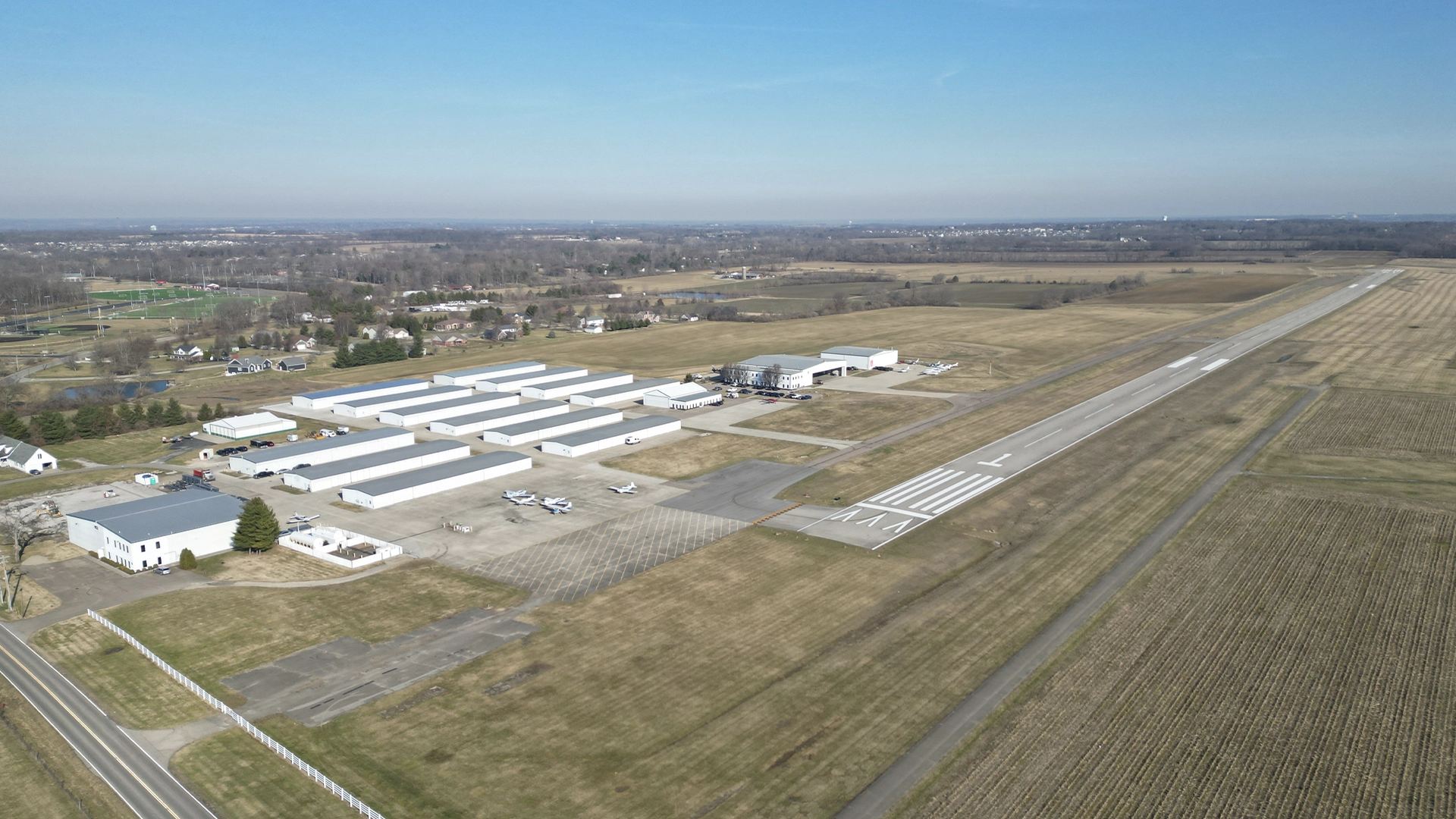
Pilots cruising a few thousand feet above Warren County Airport (I68) in southwest Ohio might think it looks pretty much like every other single-runway airport – just a strip of asphalt with aircraft parked amongst a dozen hangars.
However, from altitude, those pilots should know they are passing over the top of a thriving business beehive, a fact reinforced by the Ohio Aviation Association.
In 2025, the group named Warren County Airport the Aviation Business of the Year for “demonstrating a significant positive economic impact on the community and/or the aviation workforce through investment in infrastructure and/or human capital.”
Warren County Airport operates under a unique public-private model with no taxpayer dollars used for facility development. The airport serves as home to 150 aircraft, including single-engine, multi-engine pistons and turbines and rotorcraft, including a Premier Health medevac helicopter.
GA Airports Serve as Economic Drivers
Warren County Airport, like other business aviation and GA airports, serves as a powerful economic engine for the local community, generating jobs, supporting competitive wages, spurring infrastructure development and construction, and attracting a wide range of businesses – from aircraft maintenance and manufacturing to hospitality and logistics. In fact, a single business aircraft can generate 2.5 million in annual economic benefit for an airport and its community.
“Warren County airport is home to more than 40 businesses,” said Airport Director Josh Curtis, CFI. Curtis became I68’s airport director in 2023 after retiring from the Air Force. “From the beginning, my goal was to make Warren County Airport a thriving general aviation airport that serves and is supported by the surrounding community.”
Business aviation operations based at Warren County include Velantra, a startup focused on building a low-earth-orbit spaceplane to serve the satellite launch market. I68 is also home to several flight schools, flying clubs, aircraft maintenance facilities, helicopter and hot-air balloon operations, and pipeline patrol operators.
Warren County has a strong, diversified economy driven by major employers such as Procter & Gamble, Luxottica and several pharmaceutical companies. That level of corporate presence and economic strength created a natural demand for business aviation.
“As a pilot, I’ve always believed general aviation airports are more than just infrastructure. They’re community assets,” Curtis said. “The airport supports local businesses, creates jobs and connects people and opportunities in ways most people don’t always notice.”
Business Aviation Responds to Crises
General aviation airports also serve as vital staging grounds during crises – enabling business aviation and volunteer flight networks to rapidly deliver medical teams, food, water, generators and other lifesaving humanitarian supplies to disaster-stricken communities when traditional transportation infrastructure is damaged or overwhelmed.
In fact, 1,500 business aircraft flights each year are part of humanitarian support missions. The Business Aviation Fact Book, produced by the industry’s CLIMBING. FAST. advocacy campaign, notes that nationwide, business airplanes can reach more than 5,000 airports, many of which serve remote, hard-to-reach communities that might be cut off by natural disasters.
Warren County Airport is among those airfields that regularly step up to help disaster victims. For example, when Hurricane Helene struck the Southeast in September 2024, pilots based at I68 flew their personal aircraft to deliver critical supplies to impacted communities in the storm-ravaged region. “Seeing that firsthand is both humbling and a strong reminder of why aviation advocacy is important,” Curtis said.
GA Airports Showcase an Important Industry
Airports such as Warren County also serve as powerful gateways to the industry, showcasing aviation’s innovation and opportunity while inspiring the next generation of pilots, technicians, engineers and aviation professionals to pursue careers that will sustain and grow the workforce for decades to come.
“What has been especially meaningful is seeing our impact through community outreach and service,” Curtis said.
“Events like our Airport Fest, which is Warren County’s signature aviation celebration that gives families the chance to experience aviation up close, often for the first time.” The most recent Airport Fest drew more than 4,000 people who all had a chance to explore a variety of aircraft displays and interactive exhibits.
Airport Improvements
“When I started working at Warren County Airport, there were already many options for pilots flying into the Cincinnati and Dayton areas,” Curtis said. “Traffic at our airport was fairly nominal, but I believed we could do much better by taking advantage of our location and being intentional about how we operated.”
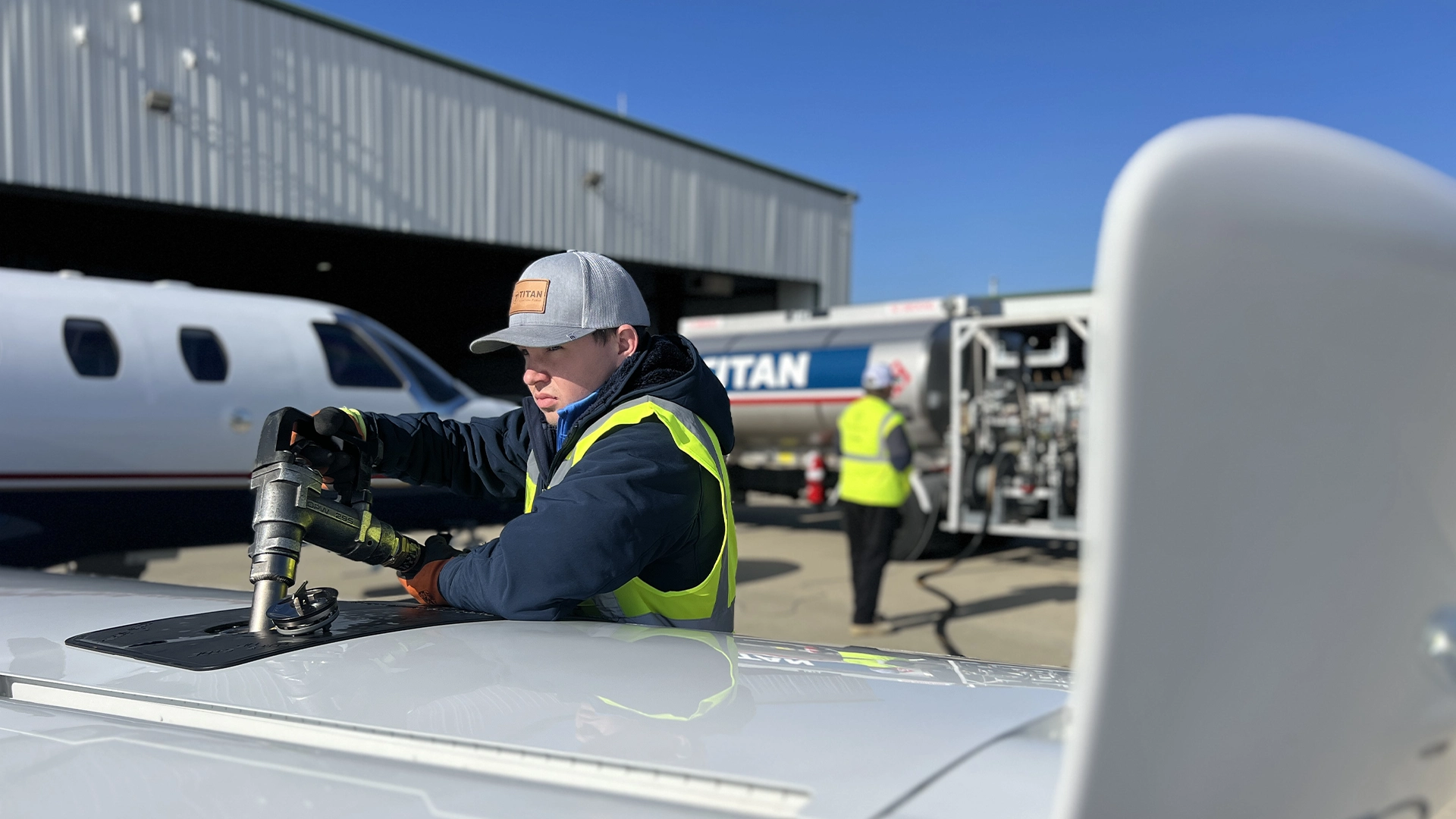
He approached improvements from his perspective as a pilot – asking himself what he would want when flying into an unfamiliar airport. He also surveyed transient crews. “I learned simple things like how pilots wanted to be greeted on the ramp and the importance of clean restrooms,” Curtis said. Also, all line staff are required to complete the National Air Transportation Association’s Safety 1st training program and wear professional uniforms.
“Several tenants from other airports have moved to Warren County Airport specifically because of the culture here,” Curtis said.
“I chose this airport for its airfield security, its offset/open location that’s available 24/7 and its incredible affordability,” said Army veteran David Calkins, who runs Echo 611, a cybersecurity consultancy specializing in cyber threat intelligence analysis.
Pilot Paul Clark has been using the airport since 2019. “The airport crew has always taken very good care of me,” Clark said. “The atmosphere here is very personal. The facilities at Warren County are all great.”
“We’re actively working with local governments to strengthen relationships and better position the airport as a resource,” Curtis said. “Demand for space continues to be strong, so managing growth responsibly is a priority,” said Curtis.
He said the airport is expected to open three additional rows of T-hangars later this year.
“A local GA airport only thrives long-term if the community sees the economic and social value it brings,” Curtis said. “I want to keep building on the strong culture we have here — supporting our pilots, tenants and businesses while continuing to make I68 a place where people are proud to be based.”