
A high school junior is contributing to the conversation around business aviation’s path to net-zero carbon emissions – highlighting the industry’s sustainability efforts and echoing the themes highlighted by the CLIMBING. FAST. campaign.
Ellory Berniard, 17, grew up in a family of pilots and has been around airplanes for as long as she can remember. “My dad and his dad both have their pilot’s licenses, so I’ve been in the air since I could walk,” she said. That early exposure sparked a passion that has only deepened over time, most recently through her work as a glider pilot.
Through a scholarship with her local gliding club, Berniard began flight training as a high school freshman. Since then, she has flied solo, gaining firsthand experience in a uniquely efficient form of flight.
Now a junior at the Math and Science Academy in Woodbury, Minnesota, Berniard is turning her passion for aviation into research on the industry’s sustainability goals.
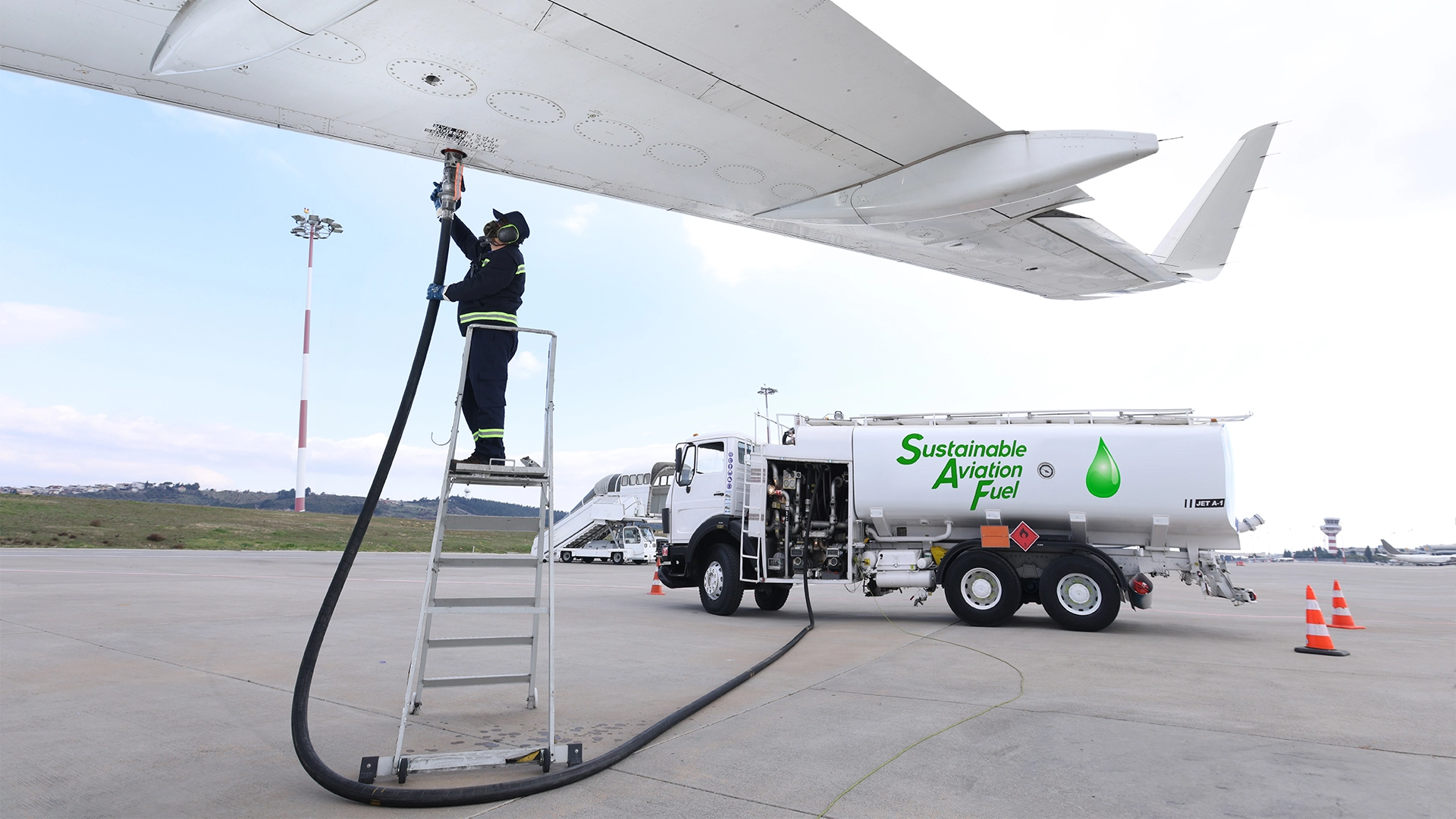
Berniard recently published a paper that explores the evolution of aviation fuels, the growing role of sustainable aviation fuel (SAF), and industry’s ambitious plans to achieve net-zero emissions by 2050.
In “Sustainable Aviation Fuel: A History and Future,” she identifies SAF as a critical near-term solution for reducing aviation emissions.
“From what I found, SAF can be a strong stepping stone,” Berniard said. “We already have the infrastructure in place, and it can be used in blends with conventional jet fuel.”
She also highlighted the importance of continued innovation.
“Scaling SAF will come with challenges, particularly around land use,” she noted. “That’s where I think additional technologies will need to play a role over time.”
Berniard sees an important role for business aviation in advancing these efforts.
The sector has long been a catalyst for innovation, helping pioneer technologies and operational practices that ultimately benefit the entire aviation ecosystem. From early adoption of SAF to ongoing investment in next-generation, zero-emissions aircraft and Advanced Air Mobility (AAM) technologies, business aviation continues to help drive meaningful progress across the industry.
These efforts build on the industry’s longstanding commitment to sustainability. Through the Business Aviation Commitment on Climate Change (BACCC), business aviation leaders pledged to achieve net-zero carbon emissions by 2050, while improving fuel efficiency and advancing the development and deployment of sustainable solutions. Today, the sector continues to make measurable progress toward those goals, leveraging its agility and leadership in innovation to accelerate change.
For Berniard, the opportunity to contribute to this evolving landscape is both exciting and motivating. “I love what I do,” she said. “I want to help take steps toward SAF and other innovations so future generations can enjoy aviation the same way I have.”
Her work reflects a growing commitment among the next generation of aviators to pair a passion for flight with a focus on sustainability to shape a future in which aviation continues to evolve, innovate and inspire.
“I love what I do. I want to help take steps toward SAF and other innovations so future generations can enjoy aviation the same way I have.”
Ellory Berniard