
An all-electric and autonomous unmanned aircraft system (UAS) will soon demonstrate how advanced aviation technology might support agriculture in California while reducing emissions, noise and fossil fuel consumption.
Pyka’s Pelican 2 has been selected for the California Zero-Emission Aviation Demonstration Project, one of the state’s first large-scale commercial demonstrations of autonomous electric aircraft in agricultural operations. The multi-year initiative is funded through the California Air Resources Board’s Sustainable Heavy-Duty Initiatives for Future Technology program, with support from the California Energy Commission.
The project provides another example of the business aviation industry’s commitment to achieving net-zero carbon emissions by 2050, as detailed in the CLIMBING. FAST. advocacy initiative.
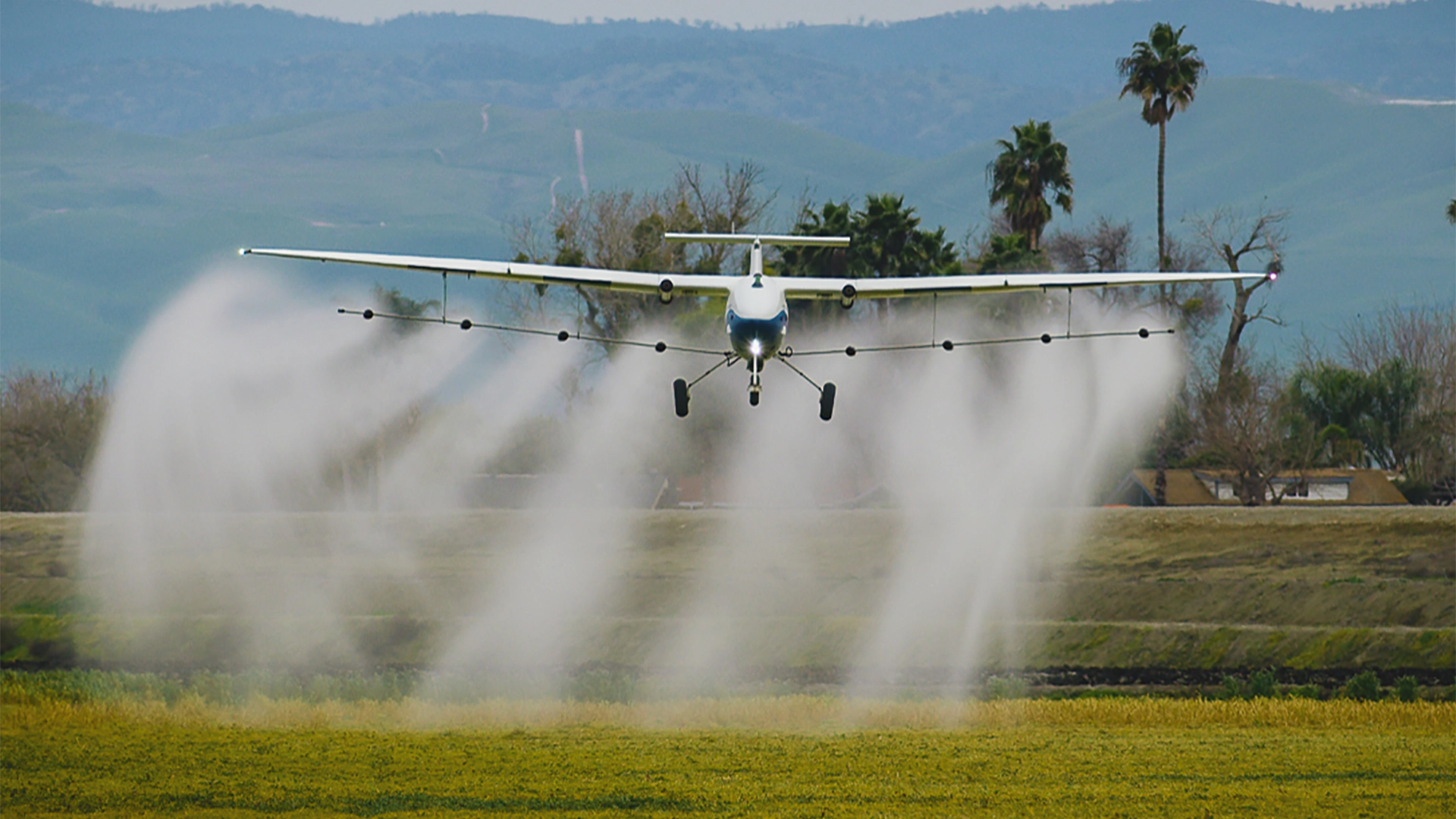
The Pelican 2 will perform agricultural missions at Victoria Island Farms in the Sacramento–San Joaquin River Delta under FAA approval. Headquartered in Alameda, CA, Pyka will manufacture and operate the aircraft while collecting data to help policymakers and industry stakeholders evaluate the vehicle’s performance and potential scalability of zero-emission UAS.
“This project will demonstrate the scalability of zero-emission autonomous aircraft,” said Pyka Chief Operating Officer Chuma Ogunwole. “By operating autonomous electric aircraft at commercial scale in a real agricultural environment, we’re proving that aviation can reduce emissions today – not decades from now – while improving safety, efficiency and community outcomes.”
“By operating autonomous electric aircraft at commercial scale in a real agricultural environment, we’re proving that aviation can reduce emissions today – not decades from now – while improving safety, efficiency and community outcomes.”
Chuma Ogunwole, Pyka Chief Operating Officer
Pyka states the Pelican 2’s all-electric propulsion system produces no direct operational emissions, while autonomous capabilities enable it to perform repetitive agricultural missions safely and precisely. The aircraft will be powered primarily through off-grid solar charging infrastructure, further reducing the operation’s dependence on fossil fuels. Aerial operations will be further supported by project-funded, zero-emission ground vehicles.
The demonstration will examine how the aircraft, solar charging infrastructure and supporting vehicles perform together in an active commercial environment. Data gathered during the project will inform future regulations, policy development and broader adoption of electric autonomous aircraft.
Over the course of the program, Pelican 2 operations are expected to eliminate more than 1,000 metric tons of carbon dioxide emissions. Ogunwole noted replacing conventional fuel-powered agricultural aircraft and diesel equipment could also reduce nitrogen oxides, particulate matter and other pollutants that affect nearby communities.
The Pelican 2 and similar UAS may also deliver benefits beyond reduced emissions. Electric propulsion can lessen noise around agricultural areas, while precise application capabilities could reduce chemical use and limit spray drift. Removing a pilot from low-altitude agricultural flights also addresses one of the risks traditionally associated with crop-application missions.
Although the initial focus is agriculture, the project could offer a template for deploying electric UAS in cargo transportation and other critical missions. The combination of autonomous operation, electric propulsion and renewable charging illustrates how emerging aviation technologies can increase efficiency while addressing environmental challenges.
“Aviation has long been one of the most difficult sectors to electrify,” Ogunwole concluded. “This project shows that with the right partners and technology, zero-emission flight is no longer a distant goal – it’s taking shape today.”
“This project shows that with the right partners and technology, zero-emission flight is no longer a distant goal – it’s taking shape today.”
Chuma Ogunwole, Pyka Chief Operating Officer
The initiative also includes workforce training led by the Foundation for California Community Colleges in partnership with NPower California and the Bay Area Community College Consortium. Pyka noted this paid work experience and professional-development pathways will prepare participants for possible careers in zero-emission aircraft manufacturing and operations.
Modern technology will play a critical role in the aviation industry’s decarbonization goals. The electric Pyka airplane is another example underscoring business aviation’s role as an incubator of emerging technology. The industry has committed to being at the forefront of developing all-new, eco-friendly propulsion systems using hybrid, electric and even hydrogen power sources.