

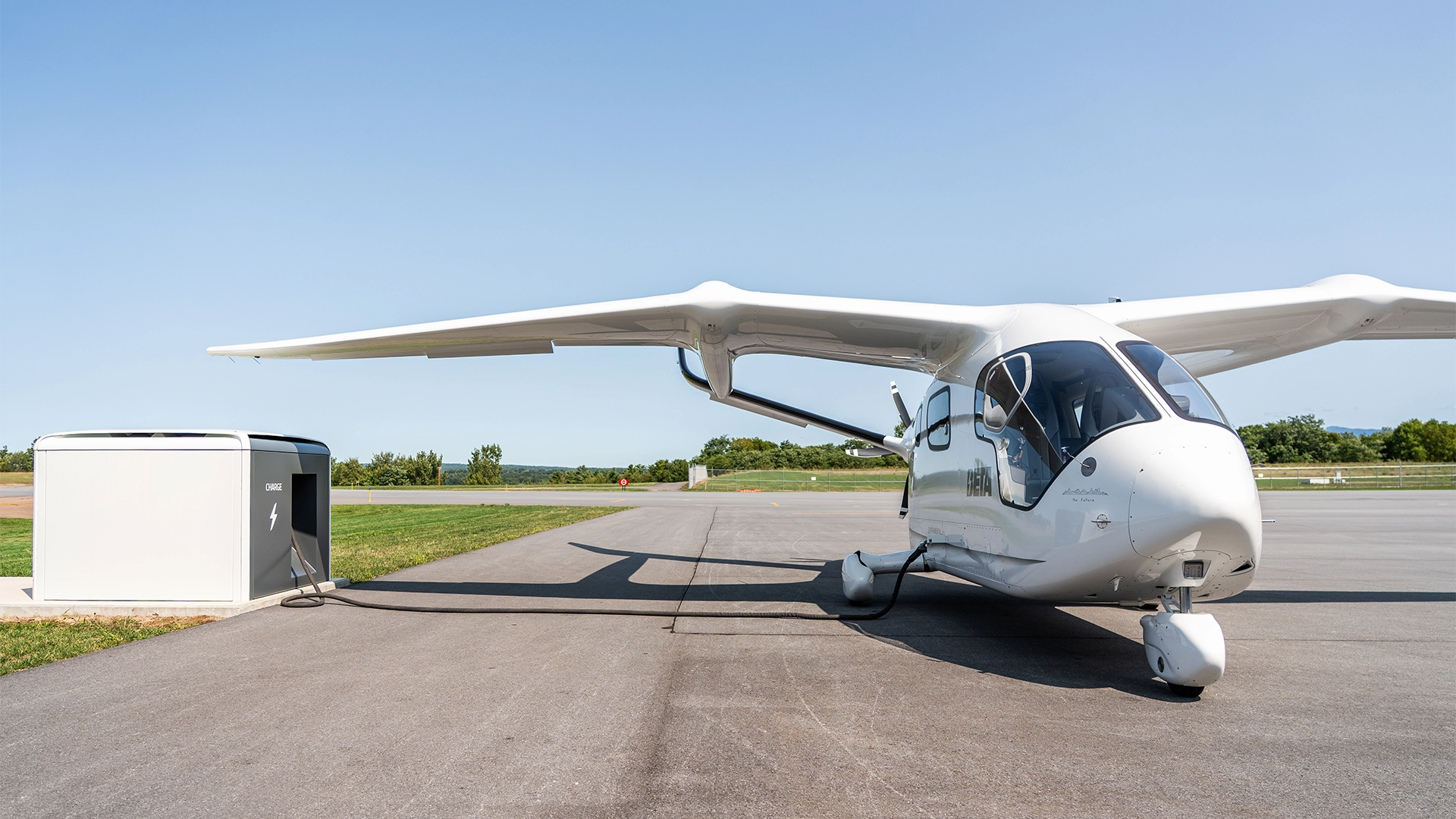
Photo Credit: BETA Technologies
BETA Technologies, Metro Aviation and Washington County Emergency Medical Services conducted a joint flight demonstration in Brenham, TX, to evaluate how electric aircraft can enhance rural emergency medical logistics. Utilizing BETA’s all-electric ALIA conventional takeoff and landing aircraft, the test involved transporting disaster-response equipment as part of an established regional emergency network.
Operating across a 700-square-mile service area that handles more than 7,000 annual calls, local officials evaluated how zero-emission flight can complement existing helicopter and ground response fleets, offering a cost-effective alternative for moving equipment, personnel and supplies across long distances.
The flight represents BETA’s inaugural Texas operation under the federal eVTOL Integration Pilot Program and forms a central component of Project Nexus, an initiative spearheaded by the Texas Department of Transportation to establish commercial electric flight corridors. By testing operational routes and charging infrastructure across regional hubs like Galveston, Sugar Land and Brenham, stakeholders aim to gather practical data and develop a standardized operational framework. Program leaders anticipate that integrating battery-powered aircraft into public agency workflows will ultimately expand healthcare access and bolster disaster recovery capabilities across expansive, underserved regions.
Independent studies point out that business aircraft fly up to 15,000 hours per year for humanitarian missions. For some companies these flights account for as much as a quarter of their operations.