
Photo Credit: Electra Aero
The Federal Aviation Administration (FAA) has launched a three-year series of demonstration flights across Virginia, New Jersey and Pennsylvania to evaluate prototype hybrid-electric aircraft in real-world operational environments.
Led by aerospace developer Electra using its EL2 Goldfinch demonstrator, the initial flight campaign connects Philadelphia International Airport to multiple regional general aviation airfields across the three states.
These tests form part of the FAA’s broader electric vertical takeoff and landing (eVTOL) Integration Pilot Program, a nationwide initiative involving state-level partners, such as the Pennsylvania Department of Transportation. The primary objective of the program is to gather operational flight data that will inform future safety regulations, test diverse airspace scenarios and ultimately lay the groundwork for potential commercial, revenue-generating passenger services.
Electra’s trial campaign highlights an operational philosophy known as direct aviation, which seeks to bypass congested regional hubs by enabling point-to-point transit from locations such as parking lots, building rooftops, and open fields.
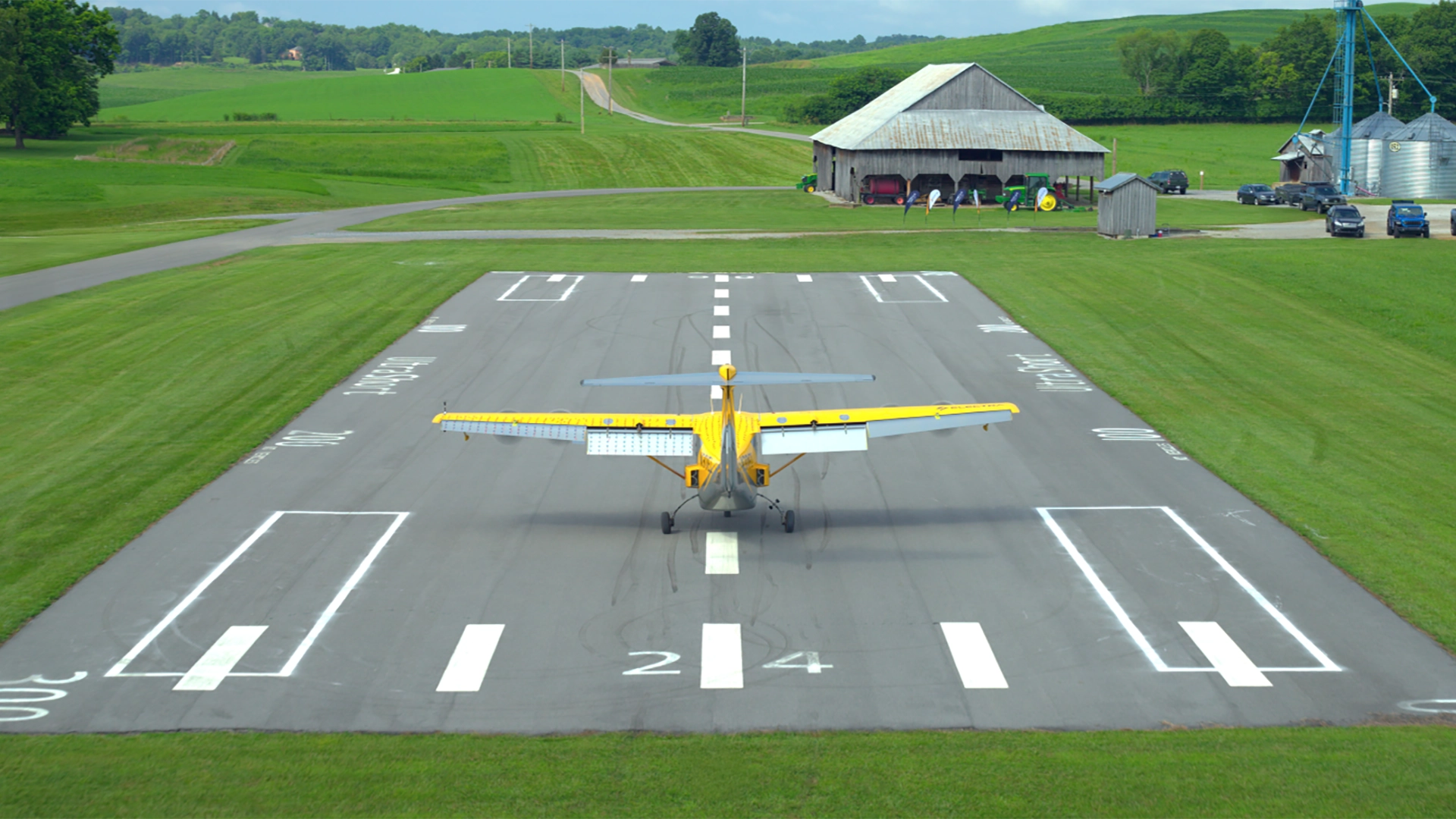
Utilizing a specialized blown-lift propulsion system, the demonstrator achieves ultra-short takeoffs and landings with as little as 150 feet of ground roll. Developing this technology—moving from the experimental demonstrator to the commercial, nine-passenger EL9 aircraft—aims to offer significant time savings for regional commuters compared to driving. Additionally, the hybrid-electric architecture lowers operating costs relative to conventional helicopters and vertiport-reliant air taxis, leveraging onboard flight recharging to utilize existing airfield infrastructure without requiring specialized ground charging stations.
For decades, business aircraft manufacturers have pioneered propulsion systems that increase fuel efficiencies, including the introduction of new eco-friendly aircraft that use hybrid, electric and even hydrogen-powered propulsion.