
Photo Credit: Gulfstream Aerospace Corporation
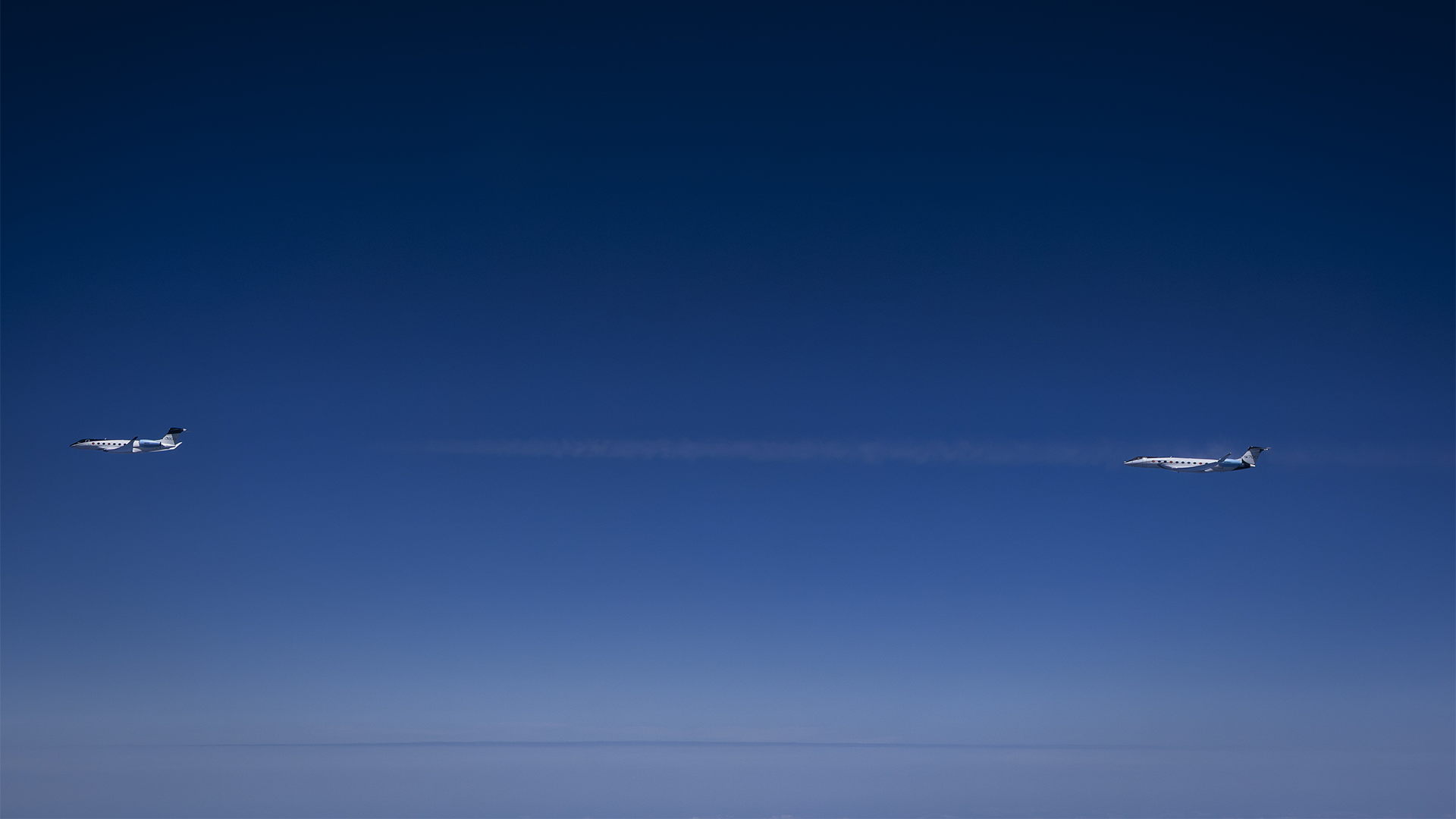
Gulfstream Aerospace Corp. completed historic, high-altitude flight research using an aircraft powered completely by unblended sustainable aviation fuel (SAF). The flight paired a Gulfstream G800 equipped with a Pearl 700 engine alongside a Gulfstream G700 that had been specially modified to act as a flying emissions measurement laboratory.
Operating in close formation at extreme heights up to 50,000 feet, the tandem aircraft allowed researchers to secure precise, real-world data on particulate matter and atmospheric changes. This environment mimics typical conditions for business jets but exceeds the operational altitudes of most commercial passenger planes.
The initiative was carried out in partnership with several prominent scientific and federal entities, including NASA, the Federal Aviation Administration’s (FAA) Center of Excellence (ASCENT), and the German Aerospace Center (DLR). By evaluating traditional Jet A fuel alongside low-sulfur alternatives and pure hydroprocessed esters and fatty acids (HEFA) SAF, the research team targeted how fuel composition influences non-CO2 emissions.
Initial findings confirm that utilizing pure SAF yields a substantial reduction in the specific soot particles responsible for generating persistent contrails. The gathered metrics will ultimately be shared with the global scientific community to optimize predictive climate models, guide future international fuel standards, and cultivate cleaner flight methods.
Sustainable aviation fuels are key to energy independence and generate job creation in tech, agriculture and other parts of the economy.