
Photo Credit: Joby Aviation
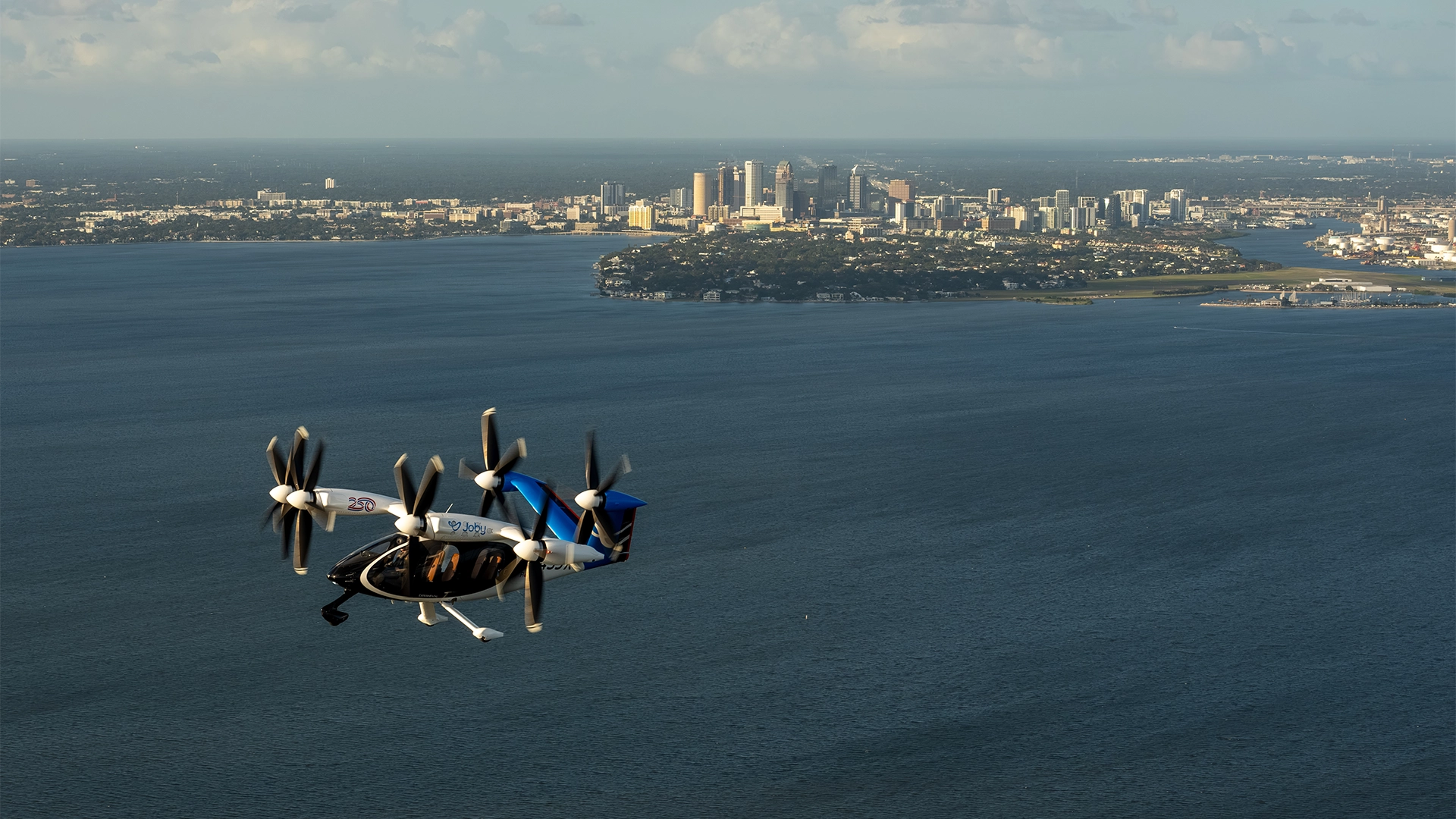
Joby Aviation and BETA Technologies have launched electric aircraft demonstration flights in Florida as part of the Federal Aviation Administration’s (FAA) eVTOL Integration Pilot Program (eIPP). The initiative began with both companies conducting flights across Tampa Bay, recreating the historic route between St. Petersburg and Tampa used for the world’s first scheduled commercial airline service in 1914.
Joby’s S4 electric vertical takeoff and landing (eVTOL) aircraft and BETA’s Alia CX300 conventional electric airplane departed Albert Whitted Airport in St. Petersburg and arrived together at Tampa International Airport approximately 20 minutes later. The demonstrations represent an important step in evaluating how different types of electric aircraft can operate within the existing national airspace system.
The Florida initiative is part of a broader effort involving government agencies and aviation companies to establish the infrastructure, operating procedures and safety standards necessary for future advanced air mobility (AAM) services. Additional demonstrations are planned throughout the state, including operations in Orlando and at Kennedy Space Center, helping evaluate potential transportation applications and develop Florida’s proposed statewide aerial transportation network.
Beyond passenger transportation, the program also aims to explore opportunities for cargo delivery, emergency medical services and other aviation operations. Data gathered during these flights will help regulators and the broader aviation community better understand the requirements for integrating electric aircraft into everyday aviation. Although commercial operations will require additional testing, regulatory progress and infrastructure development, the demonstrations provide an important foundation for expanding electric aviation across the country.
Powered by hybrid, electric and hydrogen propulsion technologies, AAM is a key element in business aviation’s mission to achieve net-zero carbon emissions.