
Photo credit: Joby Aviation
The pursuit of sustainable, vertical aviation has triggered massive investments alongside substantial financial risks. Prominent developers in the electric vertical takeoff and landing (eVTOL) sector have collectively consumed billions of dollars in capital, resulting in steep, accumulated debts and even insolvencies.
Because of these harsh economic realities and limitations in existing battery technology, major aerospace entities like Airbus and Textron have chosen to step back or entirely dismantle their eVTOL programs. Despite these departures, other firms continue to secure funding and pursue international commercial rollouts, supported by new frameworks like the Federal Aviation Administration’s Integration Pilot Program and the European Union Aviation Safety Agency (EASA) guidance, which aim to safely integrate advanced air mobility (AAM) into global airspace.
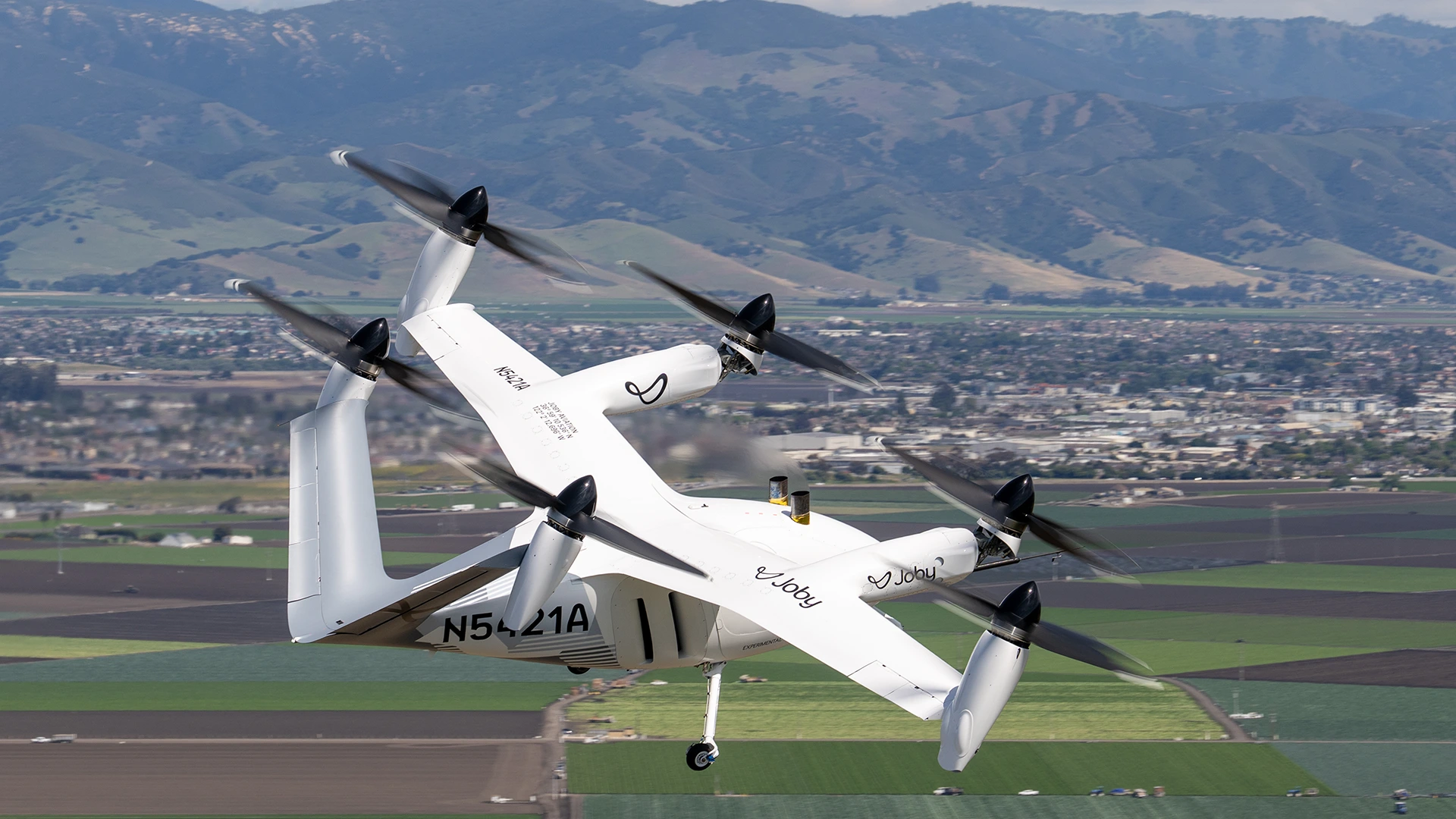
Recognizing that current battery capabilities restrict pure electric range, the industry is increasingly turning to hybrid propulsion as a crucial intermediary step. Prominent manufacturers, including Beta Technologies, Joby Aviation, and Sikorsky, are actively engineering hybrid systems that merge gas-powered turbogenerators with electric propulsion. This compromise allows for greater load capacities and significantly extended flight ranges which battery-only aircraft cannot currently match.
Concurrently, traditional helicopter manufacturers are implementing hybrid systems into conventional designs and validating the use of 100 percent sustainable aviation fuel (SAF), providing immediate ways to lower emissions while the overarching ecosystem and necessary public infrastructure mature.